IAWS 2020

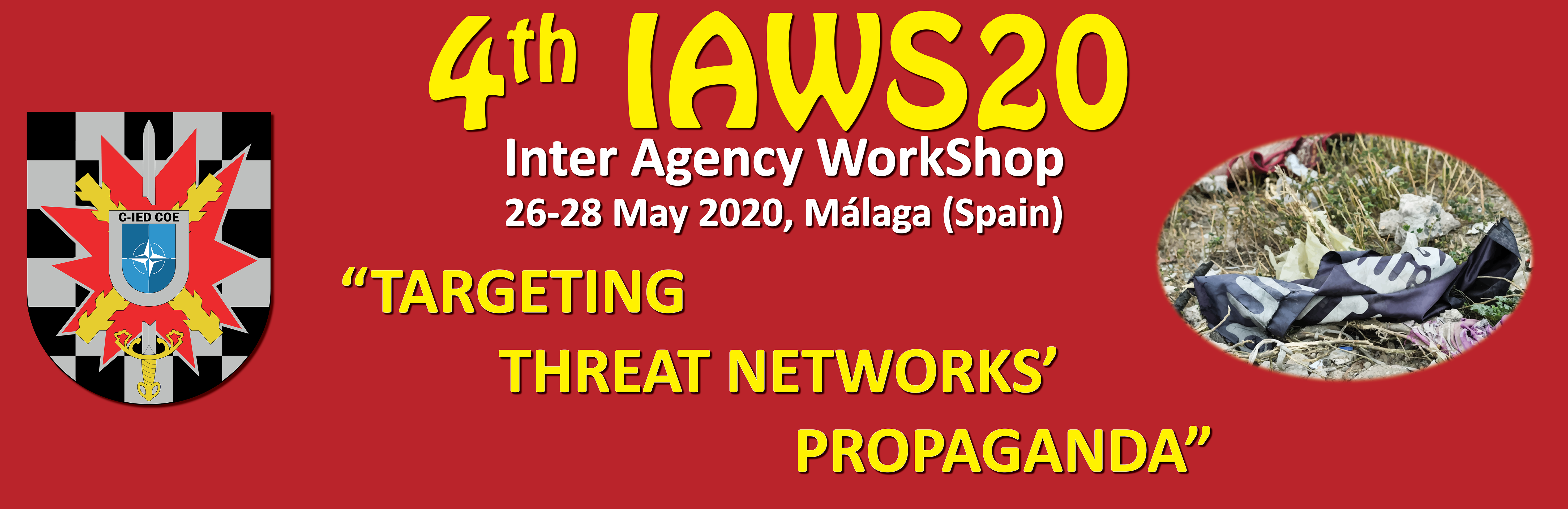
The general objective of the IAWS is to promote and improve collaboration among agencies and security forces, as well as the armed forces and civil organizations, both nationally and internationally, in order to facilitate cooperation and the flow of information on the phenomenon of the criminal networks able to operate globally along the world.

Today it is quite clear that borders do not exist for Threat Networks and criminal activities and procedures, as propaganda, used in a corner of the world will be tomorrow at home thanks to internet.

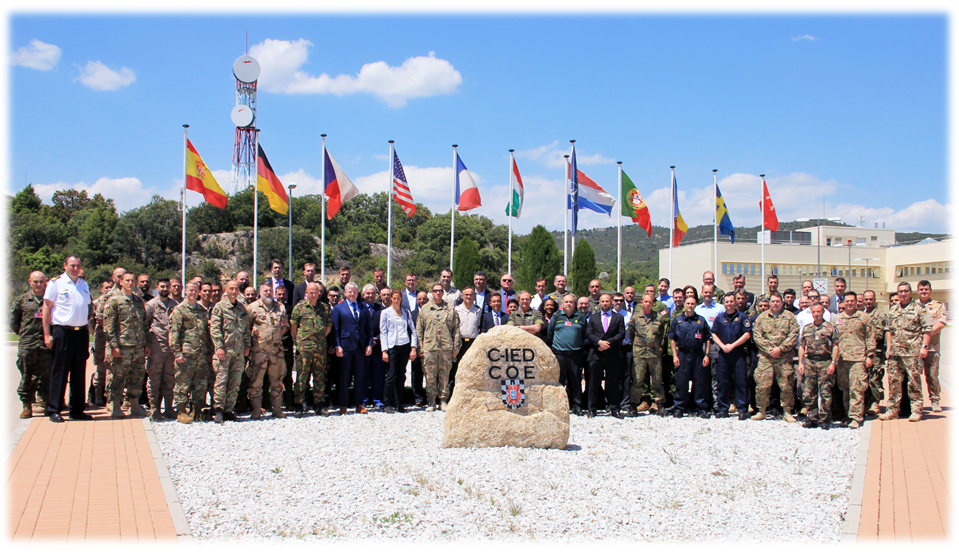
Once again, IAWS 2020 is going to be organized by C-IED Center of Excellence in May, from 26th to 28th, in Malaga.

During those three days, representatives from international agencies and international organizations, civil and military, will discuss the role that threat networks’ propaganda is playing in the promotion of influence, radicalization, training and financing of different actors related to the threat to our countries. They will also analyze different initiatives aiming to counter the effectiveness of propaganda by threat networks. Is the purpose of the IAWS to exchange views within the interagency collaboration and cooperation to identified initiatives that could support the capabilities of the rest of the Community of Interest.

All the actors involve need to achieve a comprehensive approach to anticipate, defeat and mitigate the influence from threat networks and the information exchange is a key work to do it.  

 

IAWS 2018

The NATO C-IED Centre of Excellence (C-IED CoE) organizes the 4th C-IED Technology Workshop (TWS) along three days on biannual basis.

The aim of the C-IED Technology Workshop (C-IED TWS) intends to provide the C-IED community of interest an in-depth overview of the latest technologies supportive to C-IED and Counter Improvised Threat (CIT), and to facilitate communication among participants from the above mention communities in order to meet operational needs with technological solutions.

The C-IED TWS is an ideal environment for defining end-user requirements as well as exchanging information and gaining knowledge on the tools being developed to face the evolving threat from IEDs and Threat Networks. In summary, the C-IED Technology Workshop  aims to enhance cooperation between the multinational C-IED communities.

The scheme of the event will consist of a set of panels, based on lectures followed by further discussion periods to let delegates interact. Attendees will have also the opportunity to receive direct information from companies about current and future proposals to facilitate C-IED/CIT capability enhancing.

In the next 4th C-IED Technology Workshop different panels are going to be presented through analysing the following selected topics;

  • C-IED Research & Development initiatives;
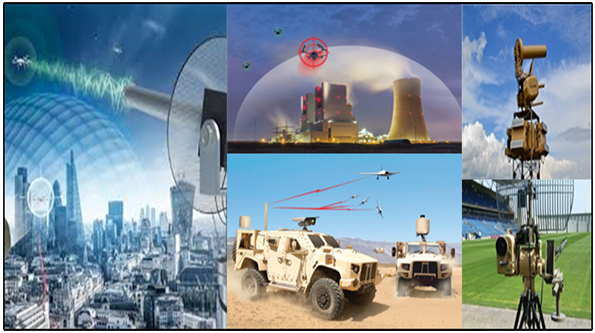
  • Future Counter Unmanned Aircraft Systems solutions related to IED incidents;
  • Advanced Stand-off detection and Neutralization Technologies;
  • Technical Exploitation for Operational needs;
  • C-IED Threat Mitigation;

During C-IED TWS attendees can walk around exhibitors’ area and to watch live demos.

The C-IED Technology Workshop is an excellent meeting point to gather experts from military, law enforcement, industry and academia to enable an exchange of views and troubleshooting of the various technology issues and capability gaps dealing with the IED threat. Increasing communication between the relevant communities of interest in this way will support the network of subject matter experts in their efforts to collectively solve future.


C-UAV Spanish Technological

C-UAV SPANISH TECHNOLOGICAL SEMINAR

C-IED COE members attended the C-UAV Technological Seminar organized by the Spanish (SP) Ministry of Interior (Technological Centre for Security - Madrid) and the SP Association for Promotion of Strategic Technologies and Industries (APTIE) and held on 15th March 2018.

More than 160 attendees from the Spanish Ministry of Interior, Ministry of Defense, Civil Guard, National Police, Academia and Industry could listen several specialized briefings and discussions on Unmanned Aerial Vehicles (UAVs) threat with a comprehensive approach but focused in technological issues mainly as state of art, legislation, protection of critical infrastructures (PCIs), research and C-UAV solutions.

Session was split into three blocks

A) State of the art of the C-UAV technology (briefings form Academia & Industry), Governmental Research initiatives (SP MoI C-UAV C2 solution & SP MoD-CONDOR project).

B) Overview of the UAVs threat (National Centre for Protection of Critical Infrastructures, MoD, Industry)

C) Solutions and C-UAVs systems provided and implemented in Industry (HORUS X and others) and in the SP Armed Forces (AUDS) and DRONE Defender as a portable solution.

Seminar showed clear needs for a deep understanding of this cutting-edge threat and for a better coordination in implementing C-UAV solutions (portable, mounted, fixed or modular and scalable). Costs are also a pressing issue because very cheap UAVs could be needed a great investment in a C-UAV system.

To overcome a new and increasing threat as UAVs it could be used (individualized or swarming attacks) against a huge number of potential targets, civilian and military too there a need for a strong investment in innovative R&D solutions, ample and adapted to risks raised. Also urban environment adds constraints for using C-UAV systems. Much more effort is required in C-UAV.

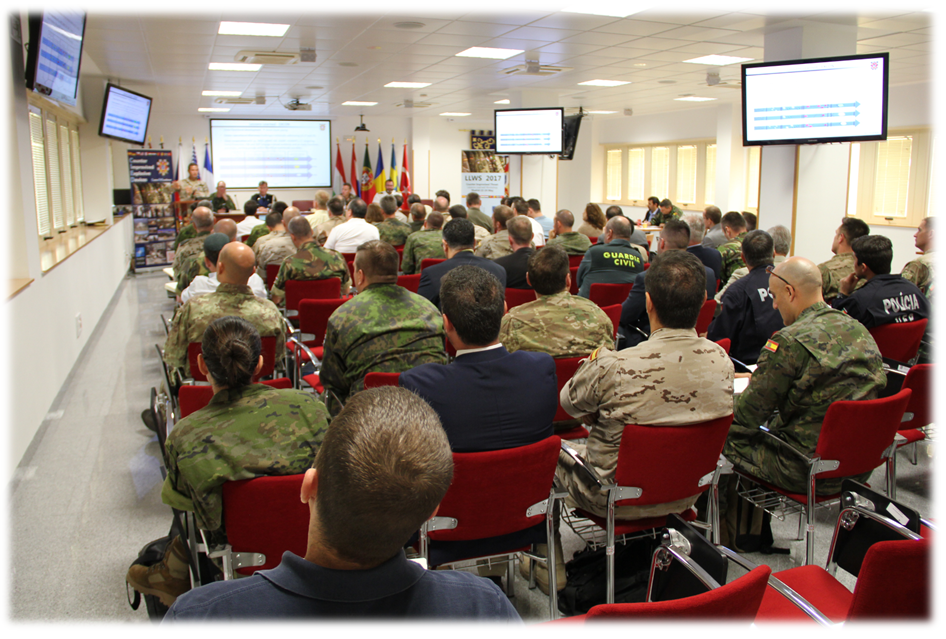
The aim of the LLWS is to feed the NATO Lessons Learned Database to improve NATO and national operations. Another goal is to increase the knowledge of missions that different nations/agencies are conducting in countries with a high IED threat, in order to facilitate and enhance interaction within the multinational C-IED community.

 LLWS 2017

 LLWS 2017

In our annual workshop, we discuss about the Improvised Threats with briefs and panels on those "new" threats that impact our civil societies and that should encourage military-law enforcement coordination at international level. This workshop should offer a methodical, logical and analytical approach to evaluate the vulnerability of organizations/forces facing any type of terrorist attack.

Therefore, our main objectives will be:

  • To update ENEMY Tactics, Techniques and Procedures (ENY TTPs) from current operations in order to gain Observations and Lesson Identified (LI) and to learn from the Improvised Threats.


  • To learn from our last support in NATO exercises and to discuss the outcome for the institutionalization of C-IED.


  • To learn from different activities around Defense Capacity Building (DCB) engagement with partners and to discuss alternative opportunities to support this kind of programme/activity for the future.


  • To facilitate and enhance interaction within the multinational C-IED Community of Interest (CoI): "Information exchange out of theatre" and to fill in the gap of the C-IED LL community info sharing.


  • To develop the "C-IED links" between each CoE, which consists of learning from Lessons Identified (LI) and developing further/closer cooperation between them.


C-IED CoE LLWS 24 Calling Letter


NEXT ITERATION 25TH - 27TH JUNE 2024

NATO STO NATO STO research TG.

The NATO SET-238 “Side-Attack Threat Detection Strategies, Technologies and Techniques” Research Task Group (RTG) has held its 5th meeting on 23-24 May in the Defence Science and Technology Laboratory (DSTL) facilities sited in Sevenoaks-Kent, London (UK). NATO SET-238 RTG objectives are to broadly identify current capability gaps in detection technologies and identify promising technologies that address detection of side-attack weapons in the context of route clearance operations. During meeting, the Research Task Group has discussed threat definition and common reference targets’ (8 different EFPs surrogates), scenarios and concealment has been agreed. Nations (GER, NLD, SWE, CAN, GBR, USA, AUS –not attended-) presented the results obtained through tests that apply specific detection technologies against Side-Attack Threat using standardized configuration. C-IED COE presented the recently completed Research project on EFPs using HME displaying its aims, phases, main milestones and final results and also made an update on EFPs threat around the world. Promising technologies on assessment are Laser Radar Scanner, 3D cameras, Polari-metric MWIR cameras, LIDAR -light detection and ranging- radar, Non-Linear Junction Detection, RF signatures, High Bandwidth Acoustic Detection and Imaging System and others. Nations are carrying out tests using same configurations (EFPs targets with same scenarios in order to understand how cutting-edge detection technologies work and performance on detection in Side-Attack Threats. In some cases, tests are part of certain national or multinational programs However, much more work is needed and more tests must be done to obtain an acceptable collection of IED data. The climate and light conditions, the hiding place, the characteristics of EFP, the location, the distances of detection of distance, the angle of shot and the capacity to obtain high resolution and discrimination are fundamental factors to increase the effectiveness in the detection. In this sense an extension of RTG activities until April 2020 has been approved by the NATO SET Panel. Finally, a homogenous and standardized data collection will be populated by nations and present promising technologies, scenarios, EFP targets and performances in detecting side-attack threats. Moreover, IED data collection will help future equipment developments or will help to focus deeper research in some technologies. .